April, 2026
Building a Biodiversity Corridor across concessions to secure the future of West Kalimantan’s orangutans
Multi-Stakeholder Solutions
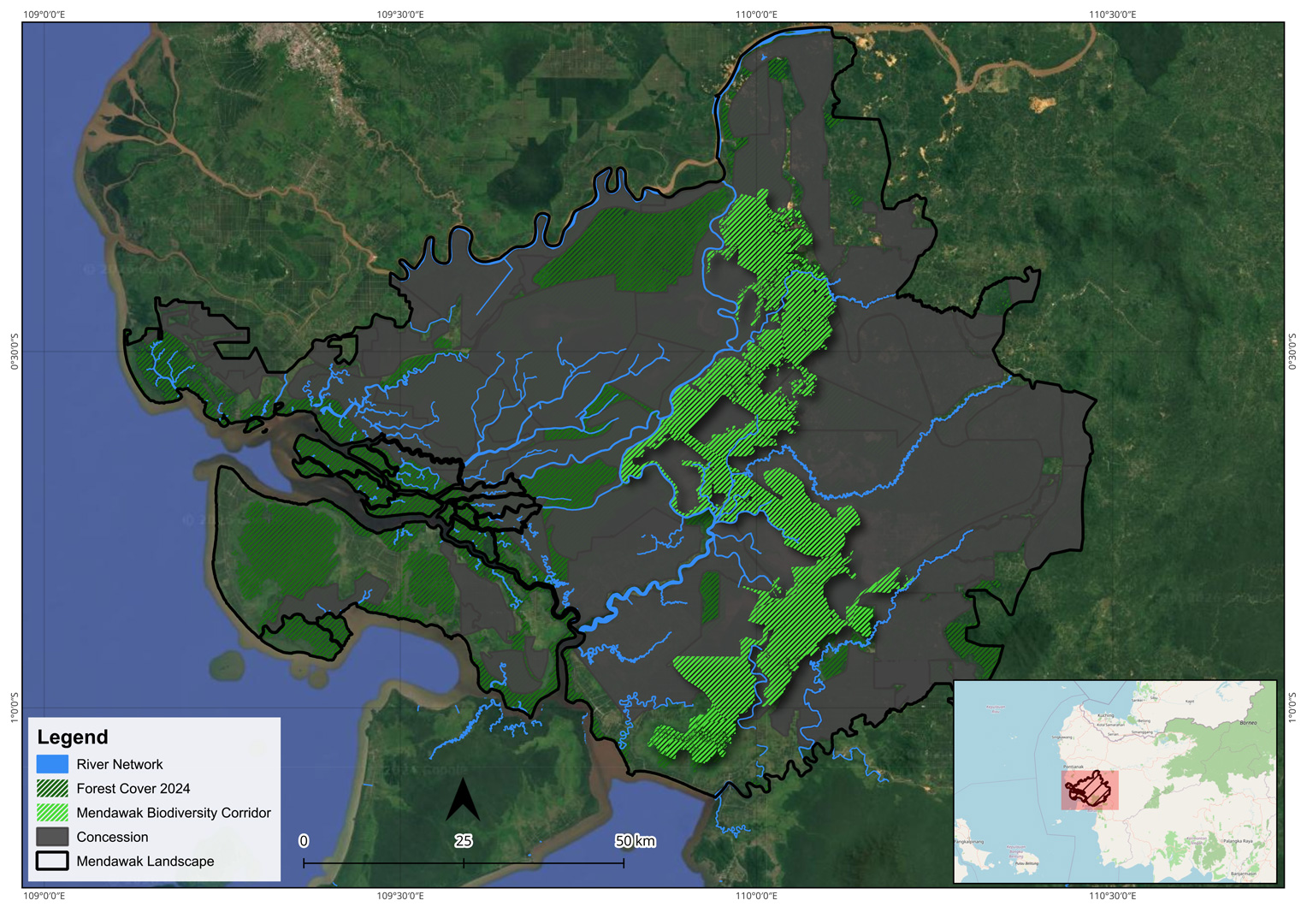
Sangga Bumi Lestari has identified a 100,000-hectare forest corridor encompassing Mendawak’s most important orangutan habitat- likely one of the largest populations outside protected areas.
The corridor spans two oil palm concessions, four pulp and paper concessions, and nine village forests. While rivers divide it into three blocks, securing and reconnecting this landscape would safeguard the population and demonstrate a scalable model for cross-concession conservation.
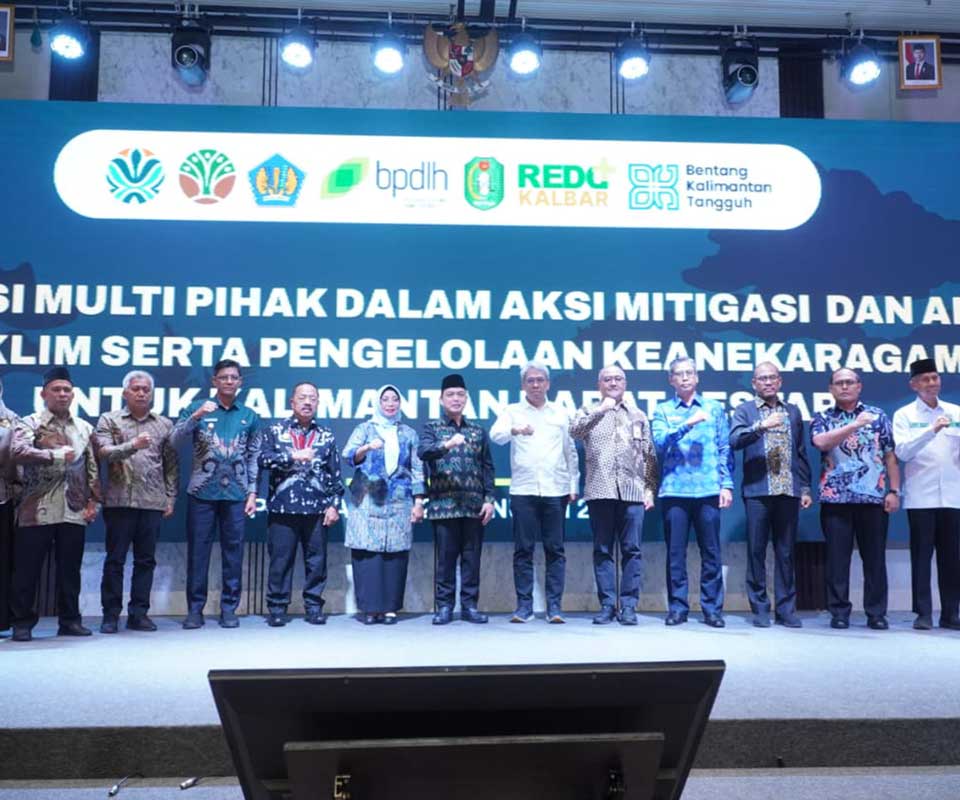
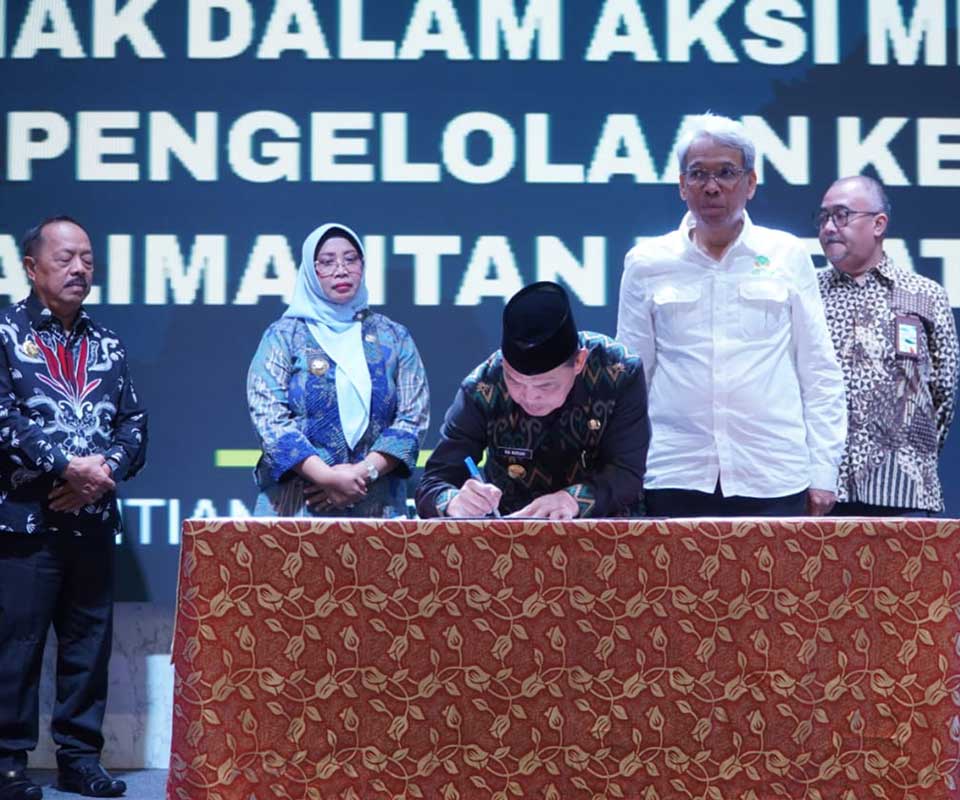
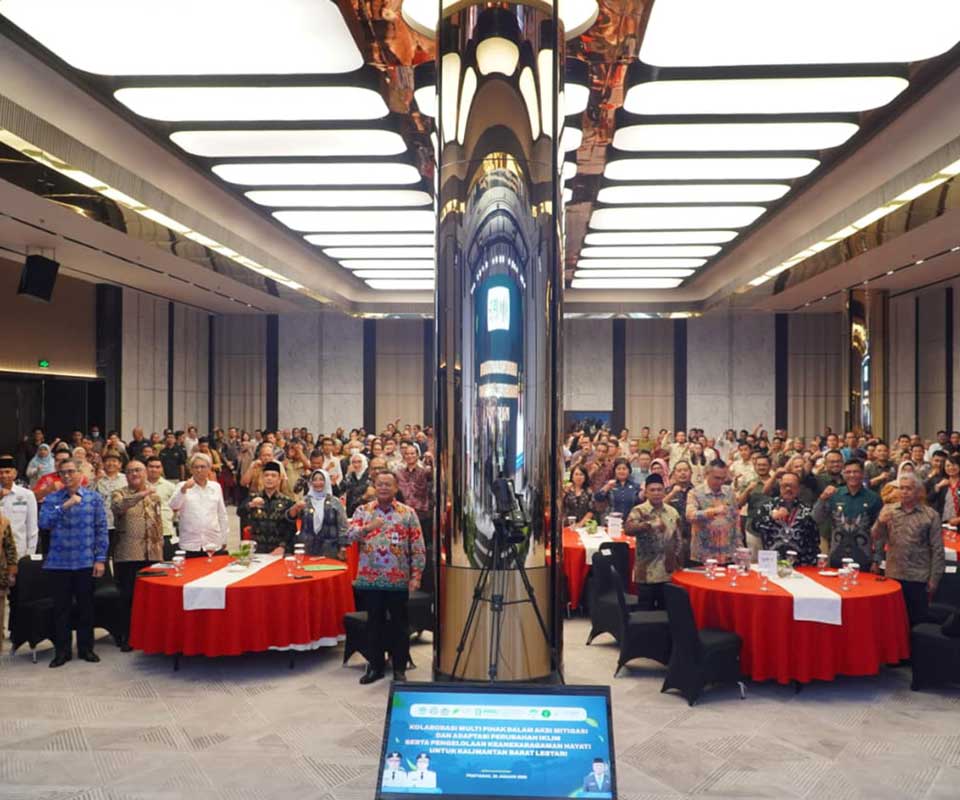
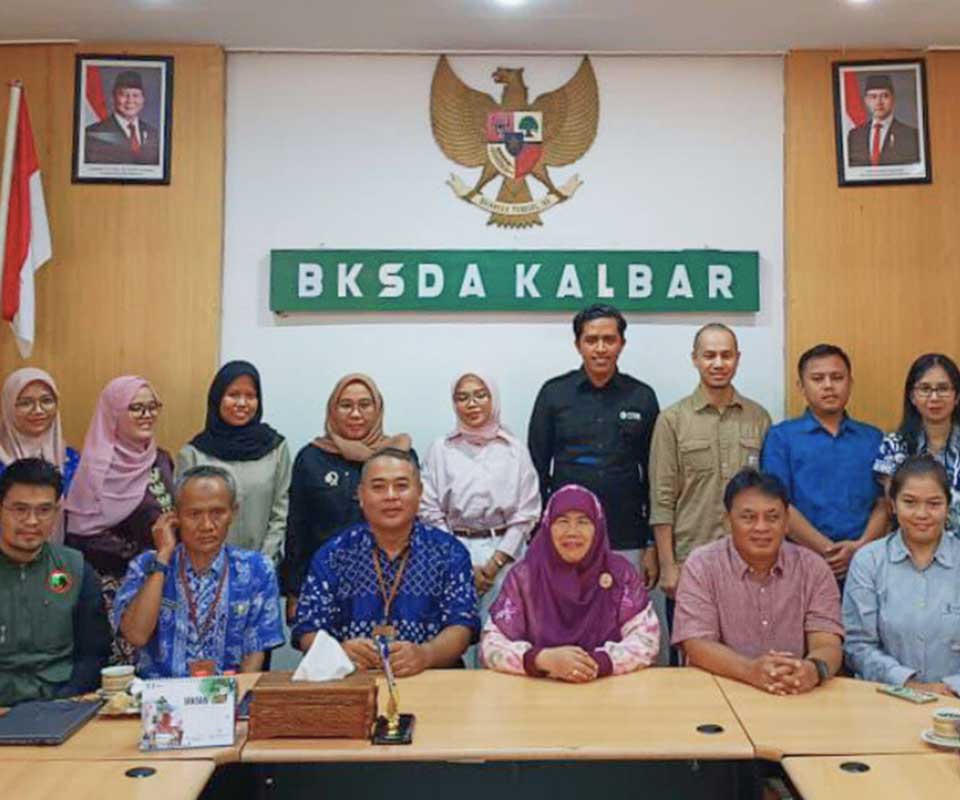
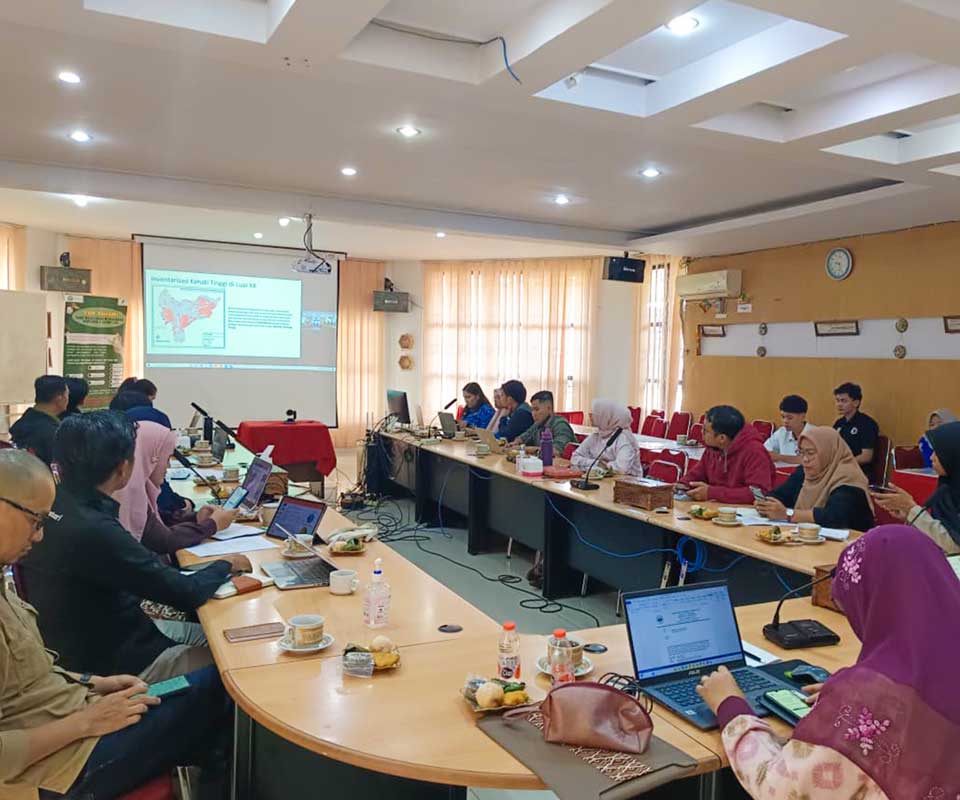
Working with the the West Kalimantan Natural Resources Conservation Agency (Balai Konservasi Sumber Daya Alam) and Environment and Forestry Agency (Dinas Lingkungan Hidup dan Kehutanan), Sangga Bumi Lestari convenes the Corridor Working Group. Through this Working Group, we bring concession holders and communities together to align conservation and development strategies across the corridor:
To secure the 99,875-hectare Mendawak Biodiversity Corridor as a connected, multi-use expanse that sustains one of the largest remaining orangutan populations outside protected areas, while establishing a replicable model for cross-concession conservation in Indonesia.
Mendawak Biodiversity Corridor
Explore the corridor through an interactive dashboard that brings together data from protected forests, village lands, and industrial concessions—revealing how multiple stakeholders shape a single connected landscape.
Mendawak Biodiversity Corridor Stakeholders
The Mendawak Biodiversity Corridor is shaped by a diverse group of stakeholders whose lands, concessions, and management decisions collectively determine the future of this fragmented landscape. Stretching across protected forests, village lands, oil palm estates, and pulp and paper concessions, the corridor brings together multiple land-use types into a single, interconnected system.
Understanding who manages each part of the corridor — and where these areas are located — is essential for aligning conservation action, sustaining orangutan populations, and demonstrating how collaborative, cross‑concession conservation can work in practice.
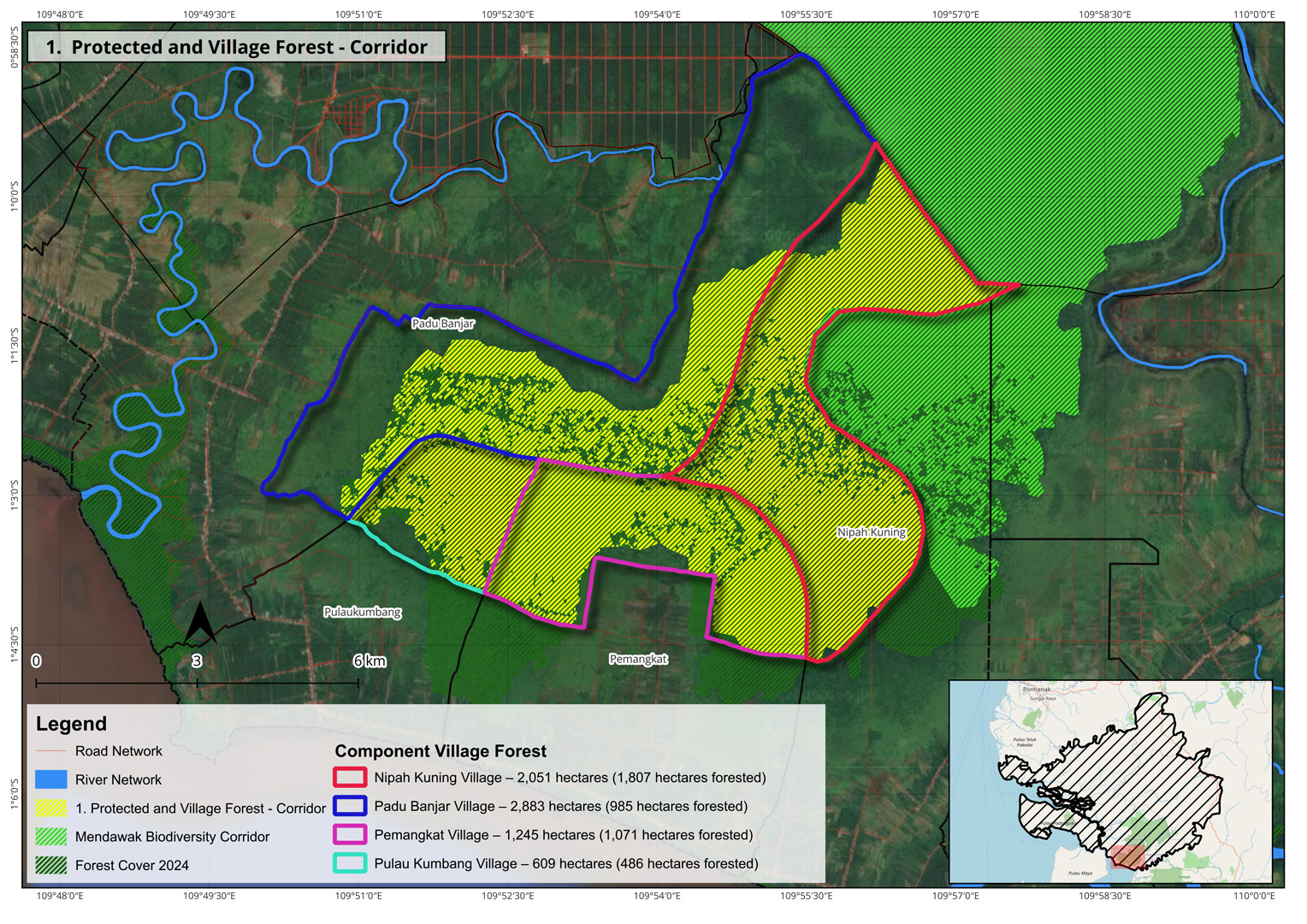
1. Protected and Village Forests
Sungai Paduan Protected Forest (6,788 hectares)
A core conservation area at the western edge of the corridor, designated under Indonesia’s social forestry programme (Hutan Desa).
Component village forests:
Conservation significance:
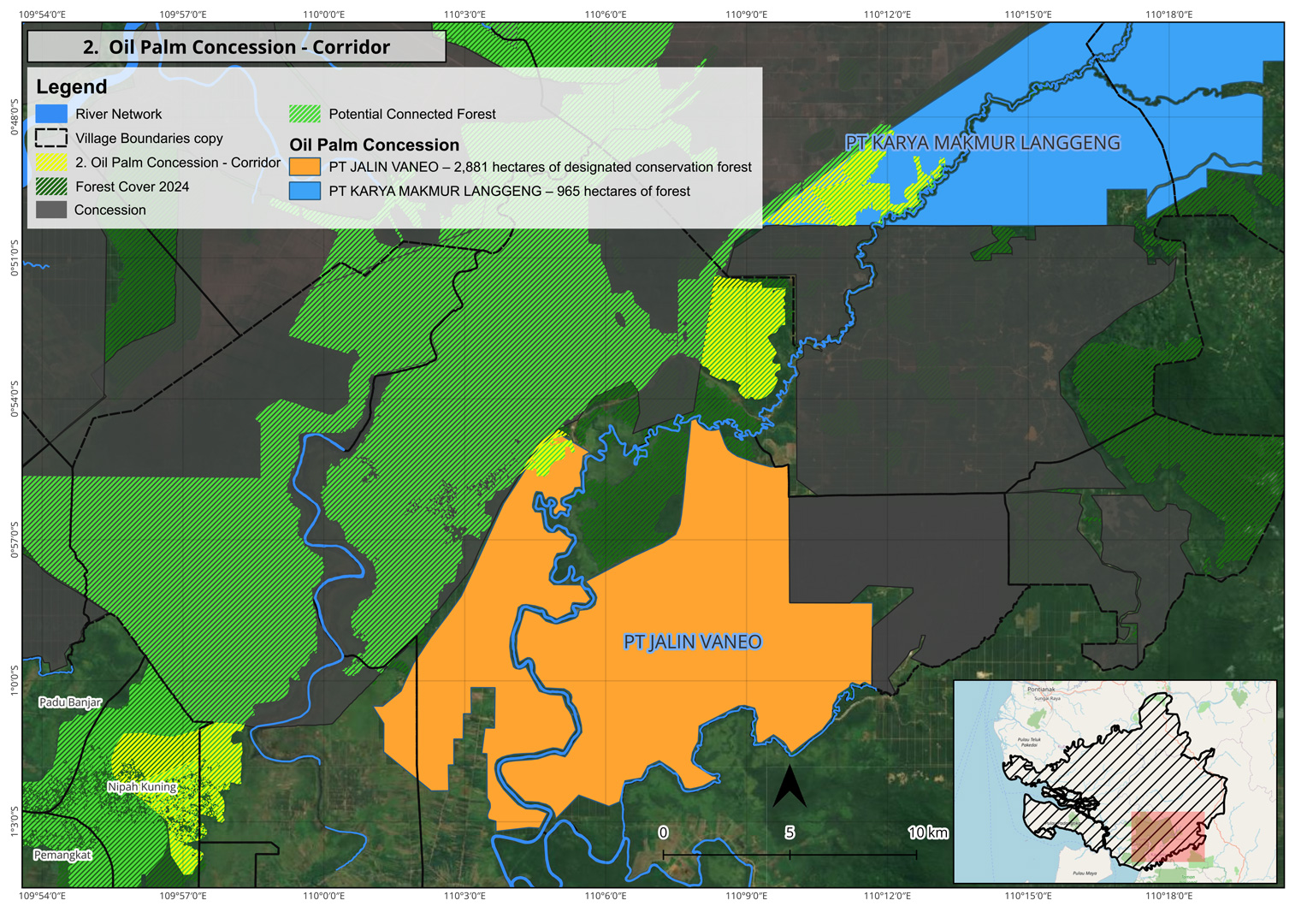
2. Oil Palm Concessions
PT Jalin Vaneo (15,949 hectares)
An oil palm concession forming key corridor links in both the southwest and northeast of Mendawak.
PT Karya Makmur Langgeng (Bumitama Agri Ltd) — 16,786 hectares
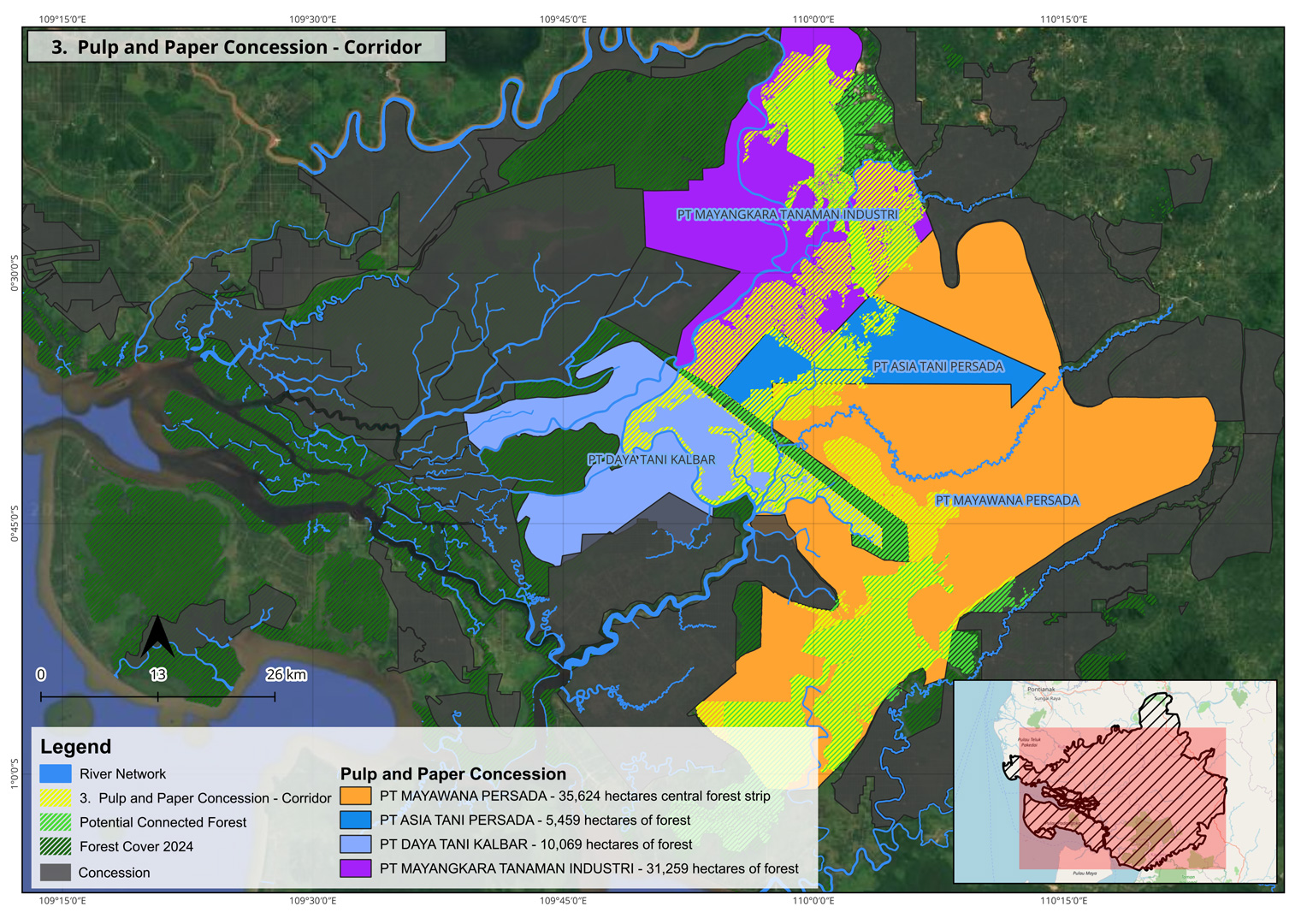
3. Pulp and Paper Concessions (Core Corridor Blocks)
PT Mayawana Persada (139,429 hectares)
The ecological heart of the corridor.
Orangutan data (2025 surveys):
PT Asia Tani Persada (20,893 hectares)
PT Daya Tani Kalbar (45,19 hectares)
PT Mayangkara Tanaman Industri (Sumitomo Forestry) — 71,366 hectares
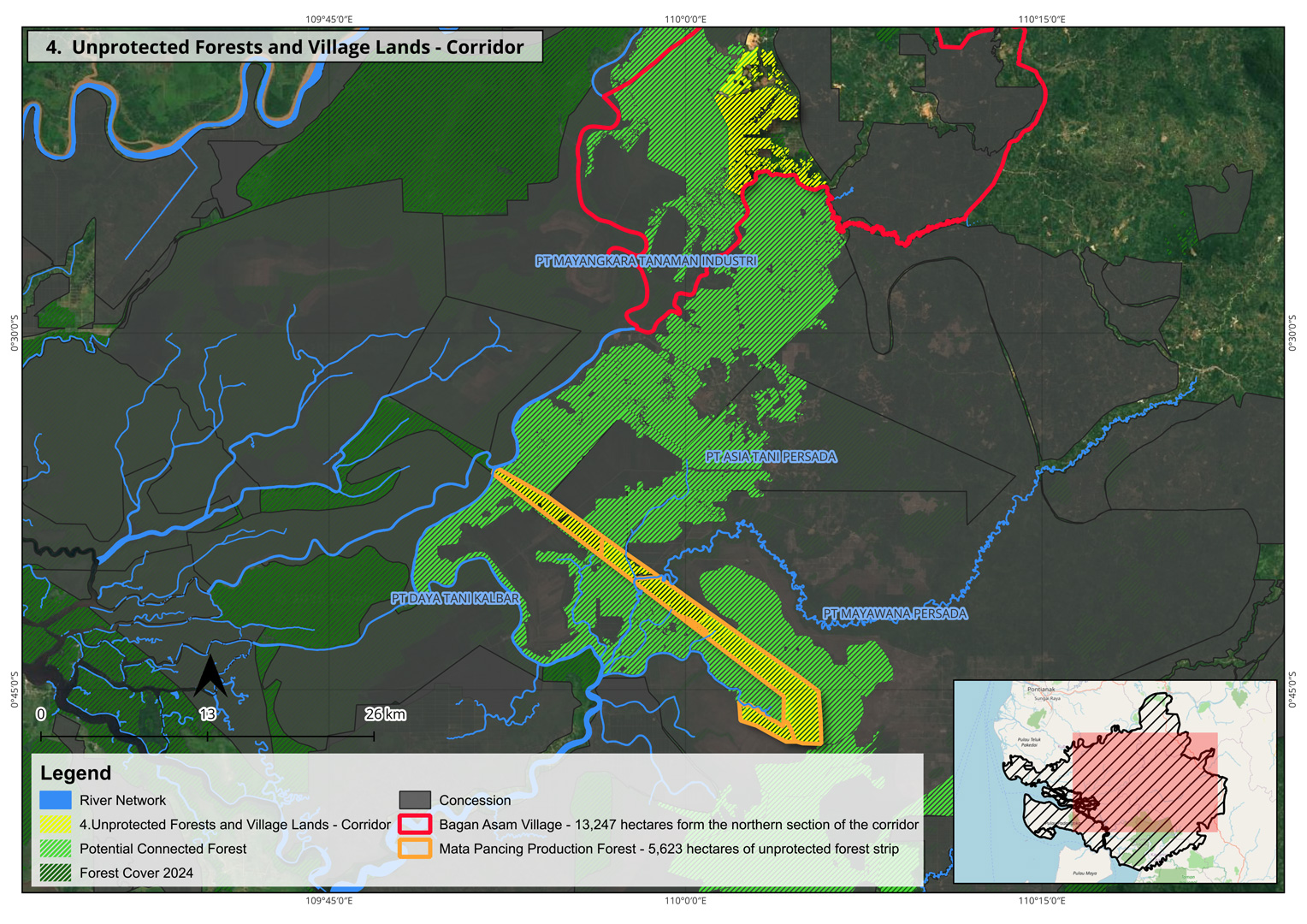
4. Unprotected Forests and Village Lands
Mata Pancing Production Forest (5,623 hectares)
An unprotected forest strip outside concessions, locally known as Mata Pancing.
Village areas included:
Orangutan survey results:
Bagan Asam Village (53,770 hectares)
Potential Corridor Expansion Areas
Two villages north of Bagan Asam offer opportunities to extend the corridor further north:
No public information is currently available on orangutan populations in these areas.