Advance Development-Focused Social Forestry
Challenge
The social forestry (Perhutanan Sosial) policy has been the flagship policy of successive Indonesian governments, seen as a way to encourage community management of forest areas. The policy is best known for how it can create Village Forests (Hutan Desa) and Customary Forests (Hutan Adat). However, there are actually five schemes within the policy. As well as Hutan Desa and Hutan Adat, there are Forest Partnerships (Kemitraan Kehutanan), which facilitates community management of areas inside industrial concessions; Community Forest Plantations (Hutan Tanaman Rakyat), which provides the framework for sustainable community logging operations; and Community Forests (Hutan Kemasyarakatan), which provides management rights over forest areas to farmer groups for Non-Timber Forest Product (NTFP) utilisation. The latter three schemes are comparatively underutilised.
Indonesian government departments often complain about the focus on Hutan Desa and Hutan Adat, particularly by NGOs and actively encourage take-up of Kemitraan Kehutanan, Hutan Tanaman Rakyat, and Hutan Kemasyarakatan as a sustainable development strategy. However, there are few examples of successful Kemitraan Kehutanan, Hutan Tanaman Rakyat, and Hutan Kemasyarakatan projects that can be used as case studies for others to follow.
Solution
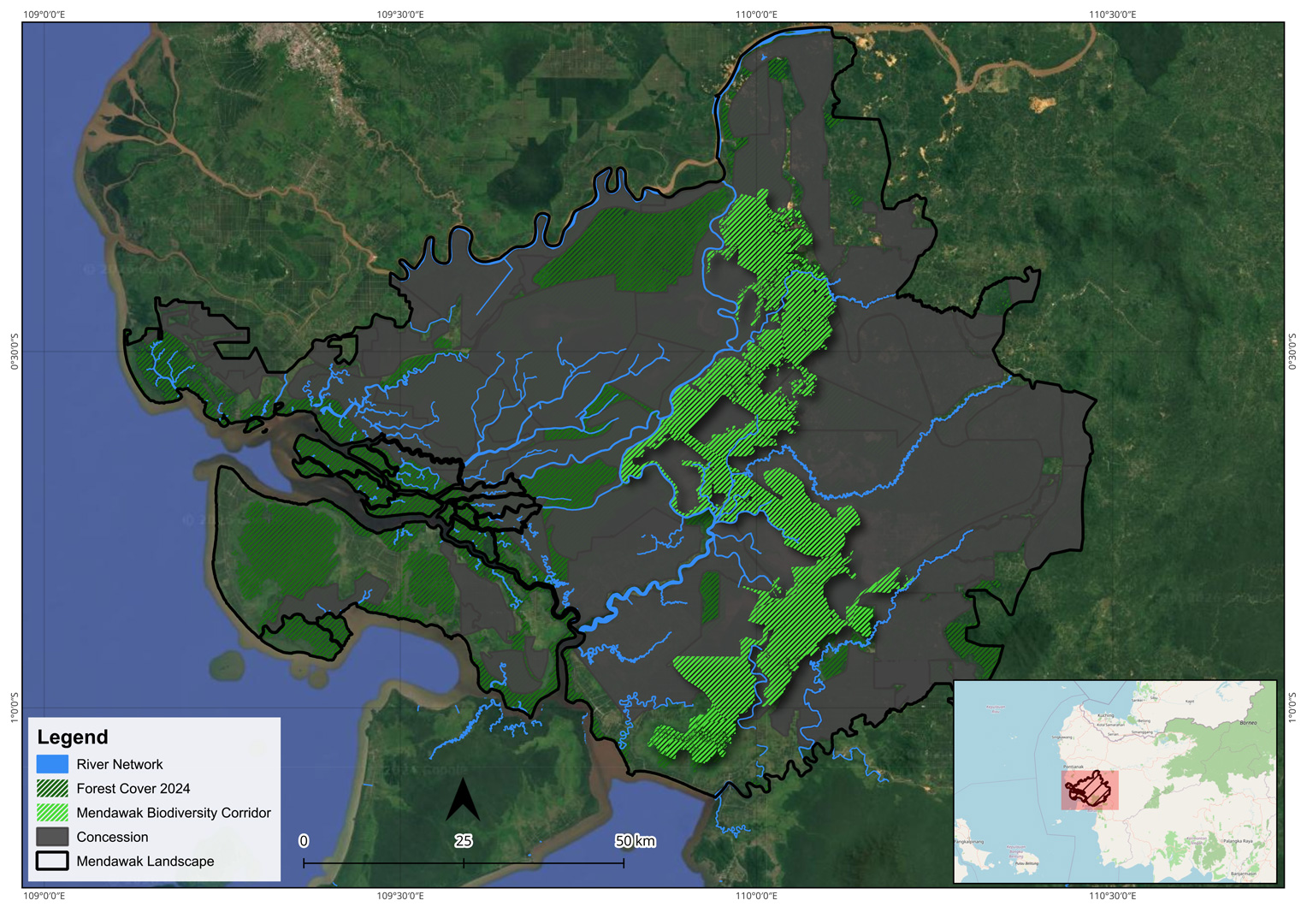
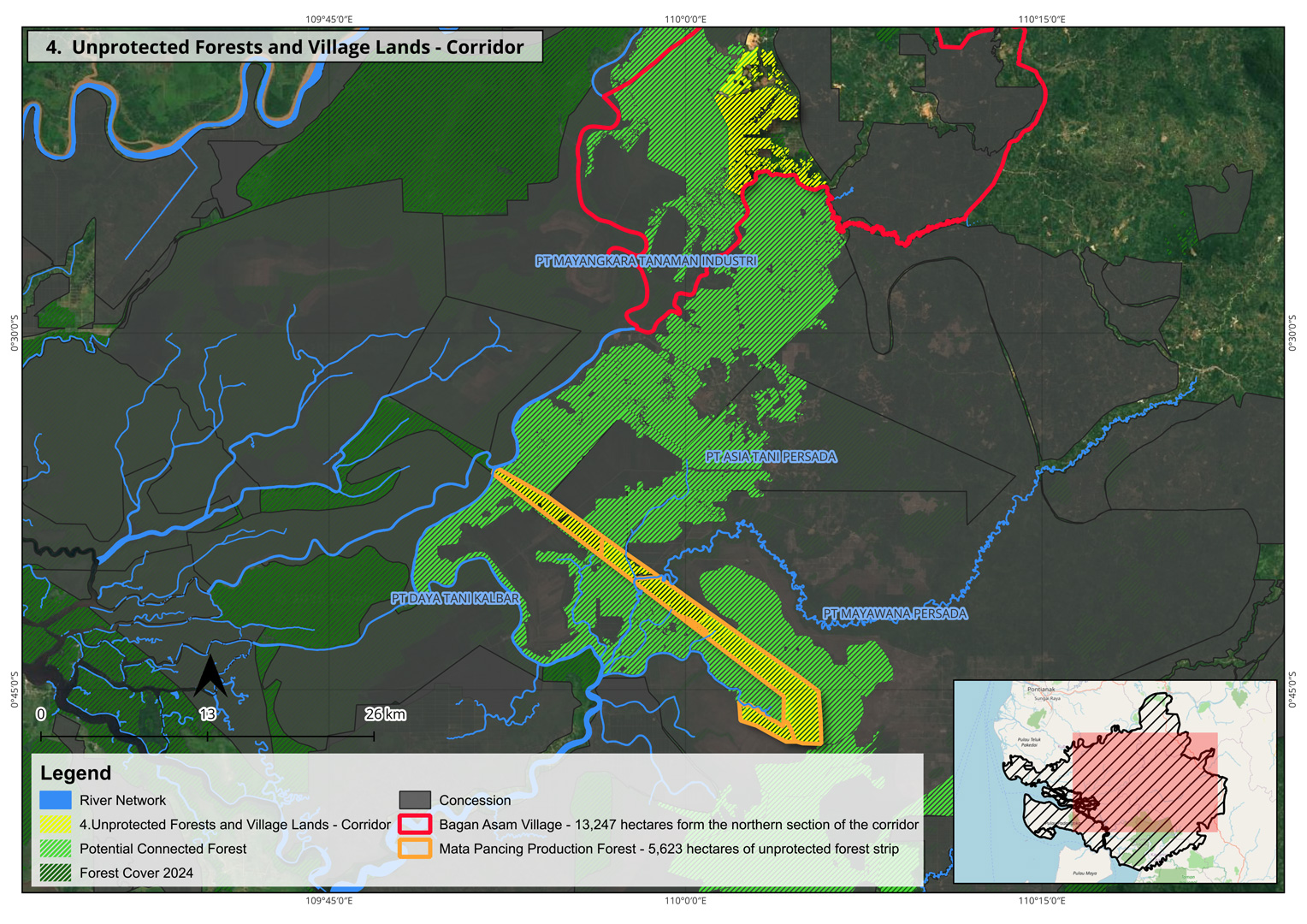
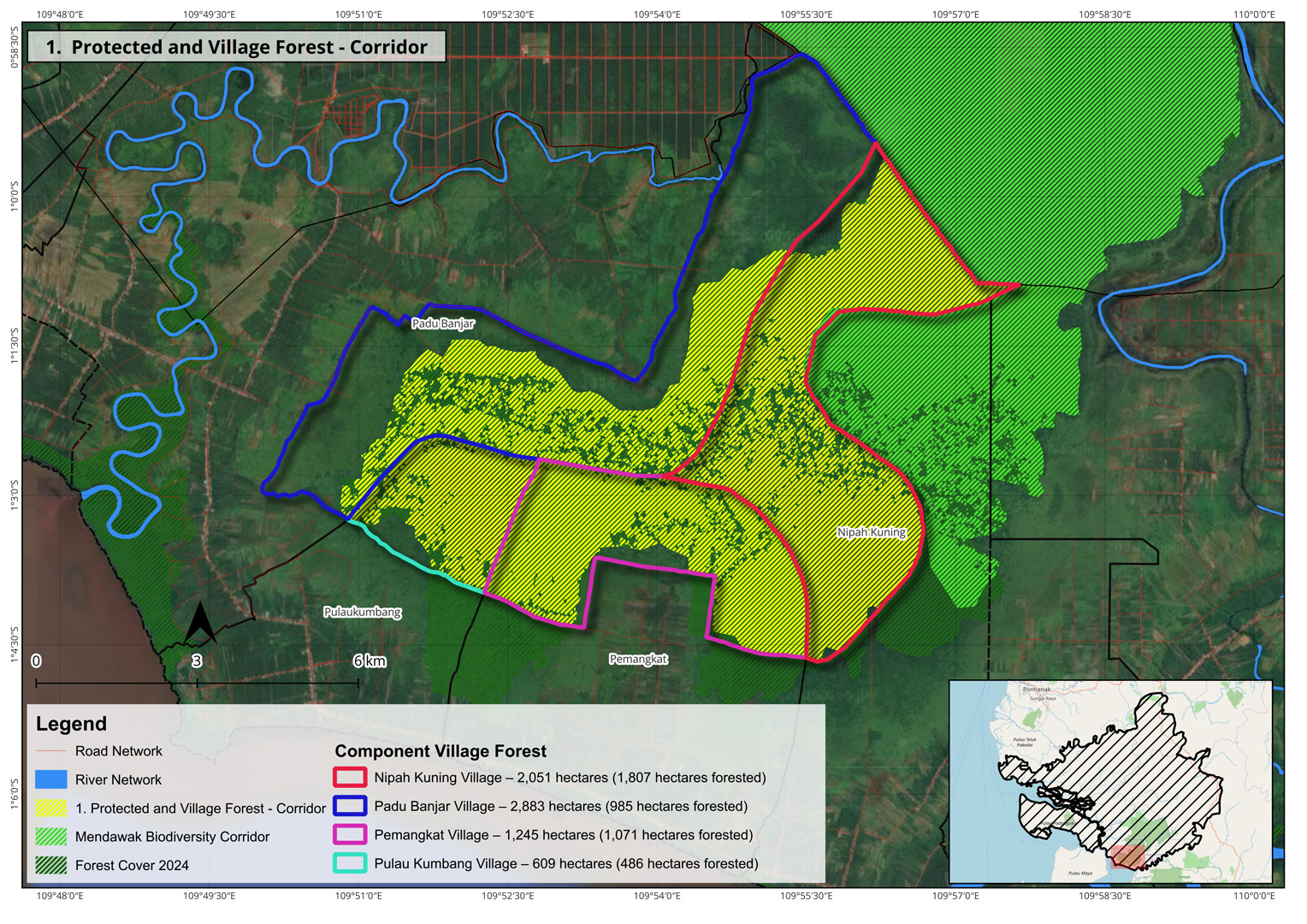
There is more to Mendawak than just the Biodiversity Corridor. To advance the idea that the entire Mendawak landscape should be viewed as a case study for the development of innovative sustainable development models, Sangga Bumi Lestari is supporting the review, implementation, and monitoring of these social forestry schemes.
Progress
There is one Hutan Tanaman Rakyat in the Mendawak landscape, in the village of Kubu, known as the Sungai Siloam Community Plantation Forest. Designated in 2012 and covering 700 hectares, it is largely considered to have failed as a social development venture. Sangga Bumi Lestari has collected information on what happened with the Sungai Siloam Community Plantation Forest, supporting a formal review of the Ministry of Forestry. Despite being managed by the Sungai Siloam Multipurpose Cooperative, weak management led to minimal replanting efforts, illegal logging, and land encroachment by oil palm companies. Loans supplied by neighbouring companies were not repaid, and today the area is not managed. The failure demonstrates the need for effective management structures for social forestry areas, and implementing staff familiar with these areas’ complicated regulatory requirements.
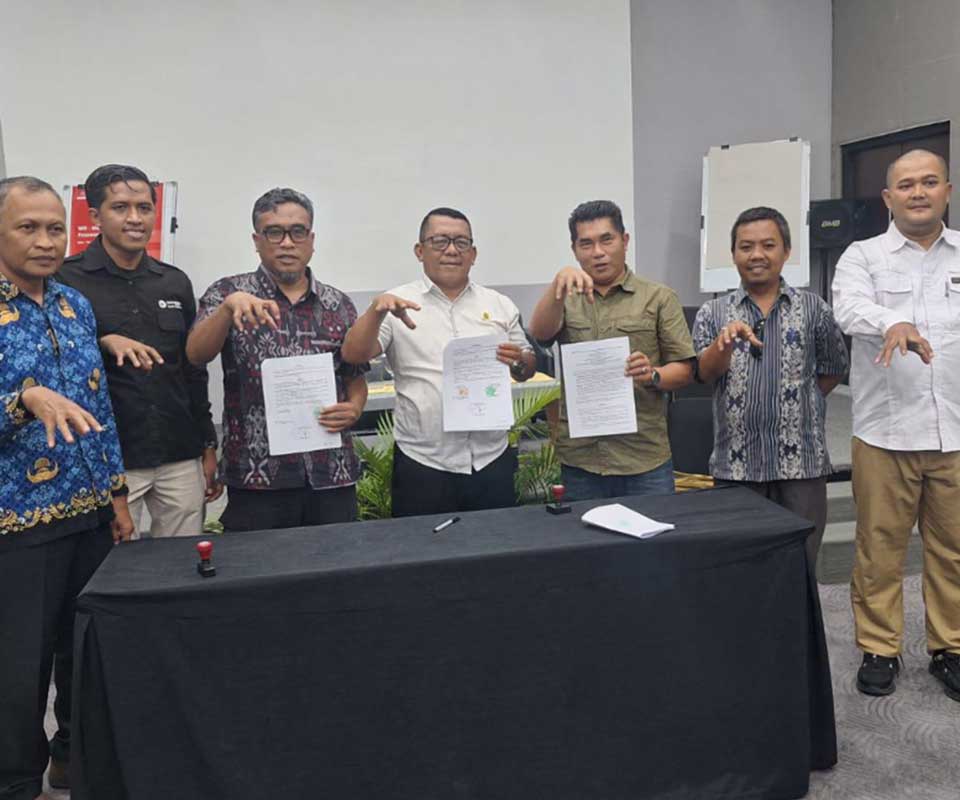
We are supporting the development of two Kemitraan Kehutanan:
- A Forest Partnership between the Kubu Bersatu Forest Farmer Group and PT Kandelia Alam in Kubu village. This partnership aims to advance joint management of a five hectare coastal mangrove forest area inside PT Kandelia Alam’s concession, which is being developed for the eventual sale of carbon credits. The partnership focuses on the development of conservation-based economic activities, including the development of alternative food sources for aquaculture systems, the cultivation of tapered fish and mangrove crabs, the promotion of ecotourism, and the utilisation of non-timber forest products
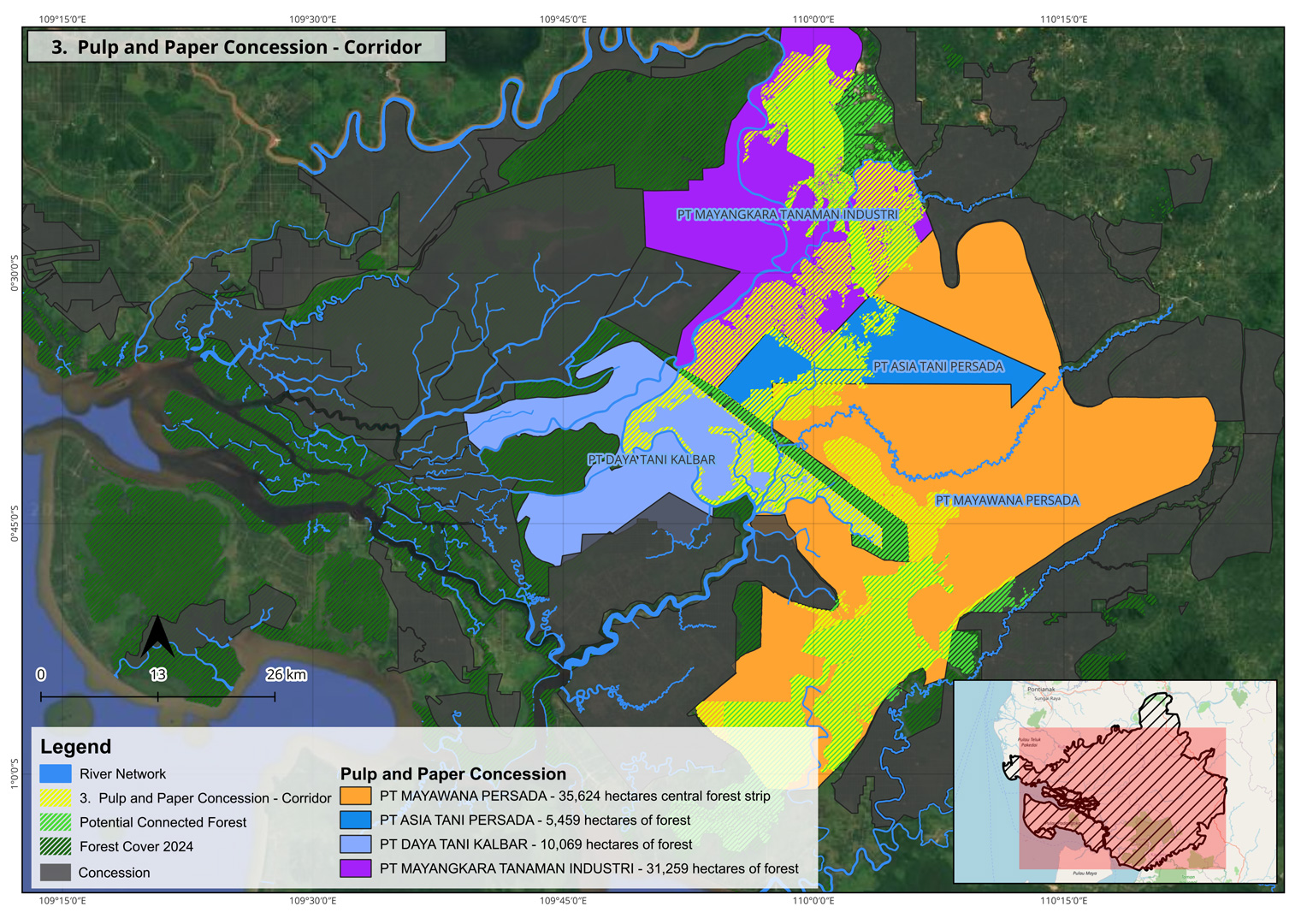
- A partnership between the Agro Hijau Lestari Forest Farmer Group and PT Daya Tani Kalbar in Sumber Agung village. The partnership will establish joint management of a 707 hectare agroforestry area inside PT Daya Tani Kalbar’s pulp and paper concession. The partnership will regulate activities like tree species enrichment, utilisation of non-timber forest products and agroforestry development.