April, 2026
Support Innovative Aquaculture Trials
Challenge
Mangrove crab and tapered fish farming is expanding along Mendawak’s mangroves. Tapered fish farming has particularly grown due to demand for the fish’s swim bladder as a surgical string in Japan. Both mangrove crab and tapered fish are fed small fish caught in rivers and coastal waters. This causes high production costs and increases pressure on natural fish stocks. Alternative sources of feed are limited. Solutions are badly needed to improve aquaculture efficiency while maintaining the sustainability of fishery stocks.
Solution
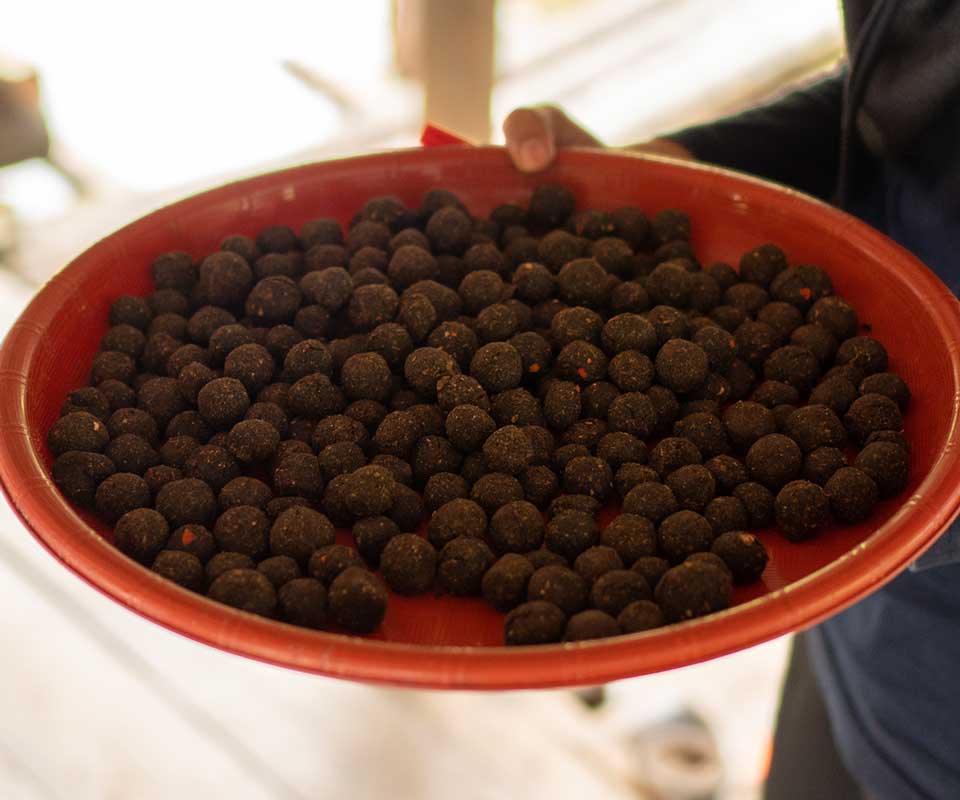
We are trialling artificial feed and agricultural waste as a potential source of feed for mangrove crab and tapered fish. We have also trialled controlled reproductive technology to support the availability of mangrove crab and tapered fish seeds and reduce dependence on natural catches. This approach is designed as a gradual step towards a more efficient, affordable, and sustainable aquaculture system at the village level.
Development
Trials on alternative feeds and controlled reproduction were conducted to assess their potential to reduce dependence on natural fish stocks and improve aquaculture efficiency for mangrove crabs and tapered fish. For alternative feed trials, three feeding treatments were tested: natural feed, artificial feed, and a combination of both. Feed was provided at a rate of 5% of individual body weight, and each treatment was repeated three times. The individual weights of mangrove crabs ranged from 0.109 to 0.179 kg, while tapered fish weights ranged from 0.244 to 0.419 kg.
After three days of observation, two out of six mangrove crabs died, indicating a generally low survival rate during the early trial period. In terms of feed preference, both mangrove crabs and tapered fish showed higher feeding activity when offered artificial feed, as evidenced by more active feeding behaviour and a greater volume of leftover crumbs compared to natural or combined feeds. However, a key limitation of the artificial feed was its susceptibility to fungal growth, which appeared within seven days, highlighting a need for further refinement of feed formulation and storage methods.
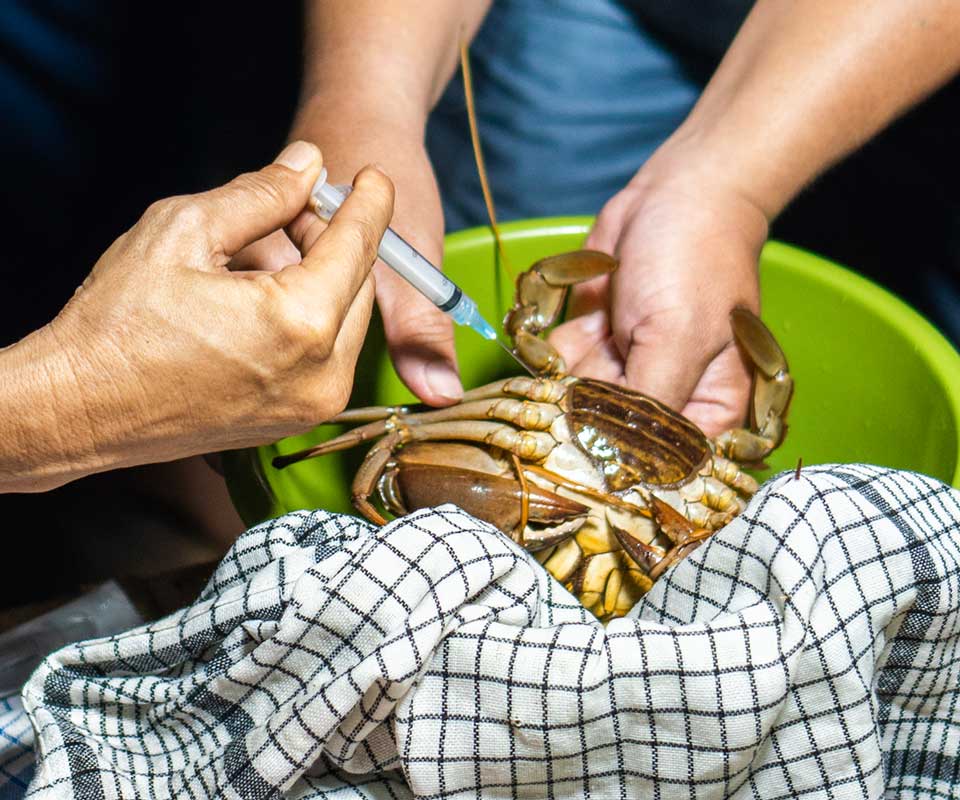
Reproductive trials were carried out using Oodev hormone injections at three dosage levels (0.1 ml, 0.2 ml, and 0.3 ml), without repetition. After four days of observation, three mangrove crabs died, while the remaining individuals showed limited observable response. Monitoring reproductive responses in tapered fish proved more challenging, as they occupied deeper water levels, unlike mangrove crabs which were kept in enclosed boxes and were easier to observe directly.
Overall, both the alternative feed and reproductive technology trials showed mixed initial results. Survival and response rates were generally higher in tapered fish than in mangrove crabs, suggesting stronger potential for further development in tapered fish aquaculture. Although these trials require continued evaluation and methodological refinement, the preliminary findings demonstrate promising opportunities for innovation in village-level aquaculture systems and represent an important first step toward more efficient, affordable, and sustainable fisheries practices.