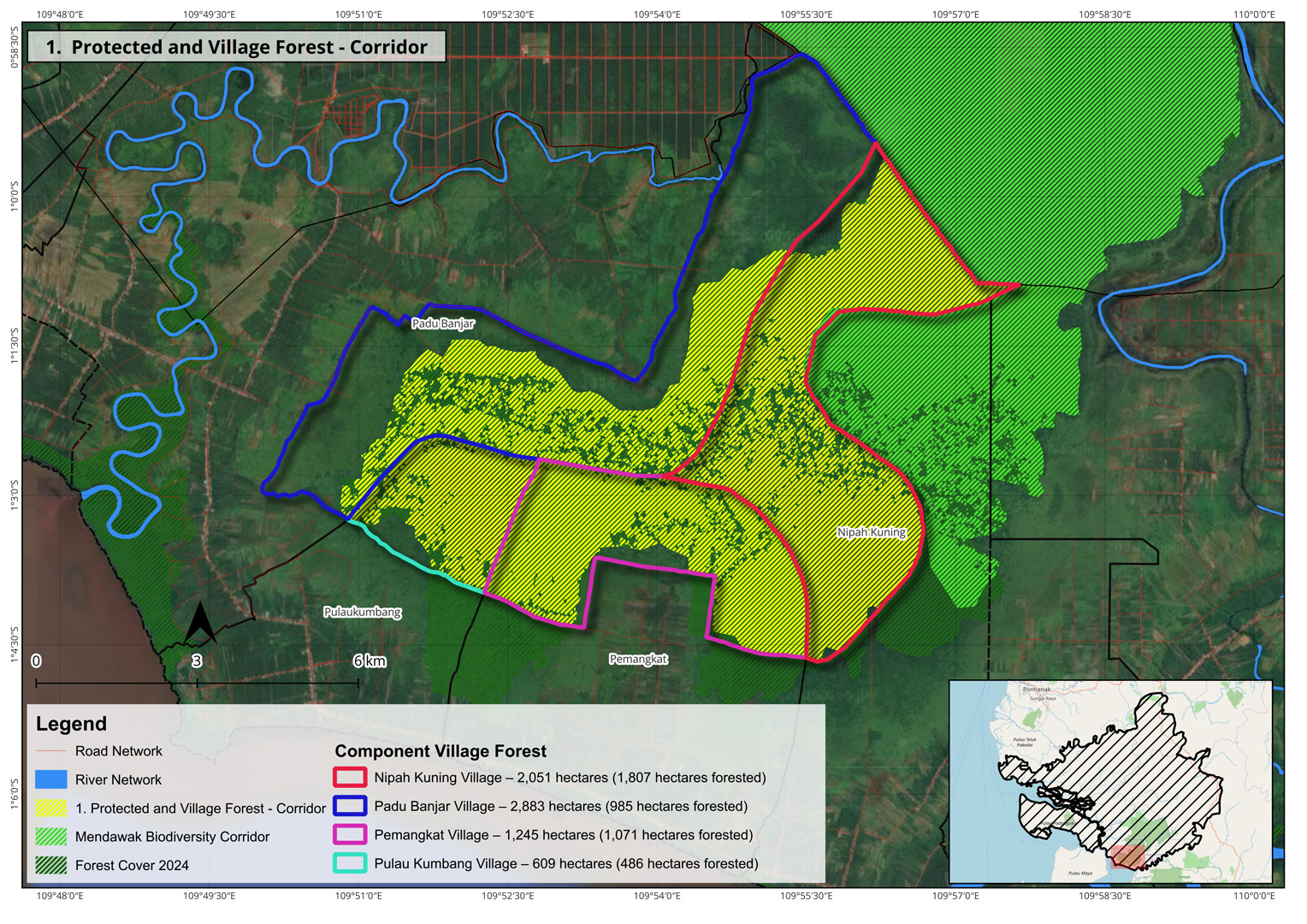
April, 2026
Facilitate Standardised Village-Level Land Management
Challenge
Indonesia’s complex land categorisation system divides territory between the Forest Estate (Kawasan Hutan) and Other Land Uses (Area Penggunaan Lain / APL). These two land categories are governed by different regulations, overseen by different government departments.
Fragmentation is compounded by the subdivision of the Forest Estate into protected areas (Hutan Lindung and Hutan Konservasi) and production zones permitting extraction or conversion (Hutan Produksi, Hutan Produksi Terbatas, and Hutan Produksi yang Dapat Dikonversi), alongside comparatively weaker safeguards in APL. This land categorisation system results in disjointed landscape management, boundary conflicts, industrial operations proceeding without meaningful community consent, conservation approaches confined to sectoral silos that ignore wildlife mobility, and livelihoods at risk as farmers cultivate unsuitable land.
In concession-dominated landscapes like Mendawak, villagers are often at the mercy of land-use decisions beyond their control. A lack of integrated planning at the village level impedes their ability to engage with Mendawak’s more powerful stakeholders and defend village interests.
Solution
In Indonesia, there are several planning instruments that the government allocates to villages to guide development, budgeting, and land use. The two with the most significant legal authority are the six-year Medium-Term Village Development Plan (Rencana Pembangunan Jangka Menengah Desa) and the annual Village Government Work Plan (Rencana Kerja Pemerintah Desa).
These two instruments are the best mechanism to advance sustainable development at the village level. To guide the formation of these documents, we first develop village spatial plans (Rencana Tata Ruang Wilayah Desa). Village spatial planning provides the framework for communities to map existing land uses, agree on management priorities, and coordinate development across different land categories.
Always a long-term strategy of Sangga Bumi Lestari’s but never previously legally binding, the role of spatial plans in village development has been strengthened by the recent issuance of a regulation from the Minister of Villages and Development of Disadvantaged Regions (Number 13 of 2025). The regulation states that village spatial planning is an integral part of the development of each village’s mandatory Village Information System (Sistem Informasi Desa), a digital system for village administration and data management, and gives villages the authority to use spatial plans for long-term village development planning.
We work with villagers to embed these spatial plans into the six-year Medium-Term Village Development Plan and the annual Village Government Work Plan, ensuring that conservation and sustainable development goals are reflected in the village’s official planning documents. They can subsequently be integrated into the annual village budget (dana desa) through the annual village planning deliberation meeting (Musyawarah Perencanaan Pembangunan Desa).
Progress
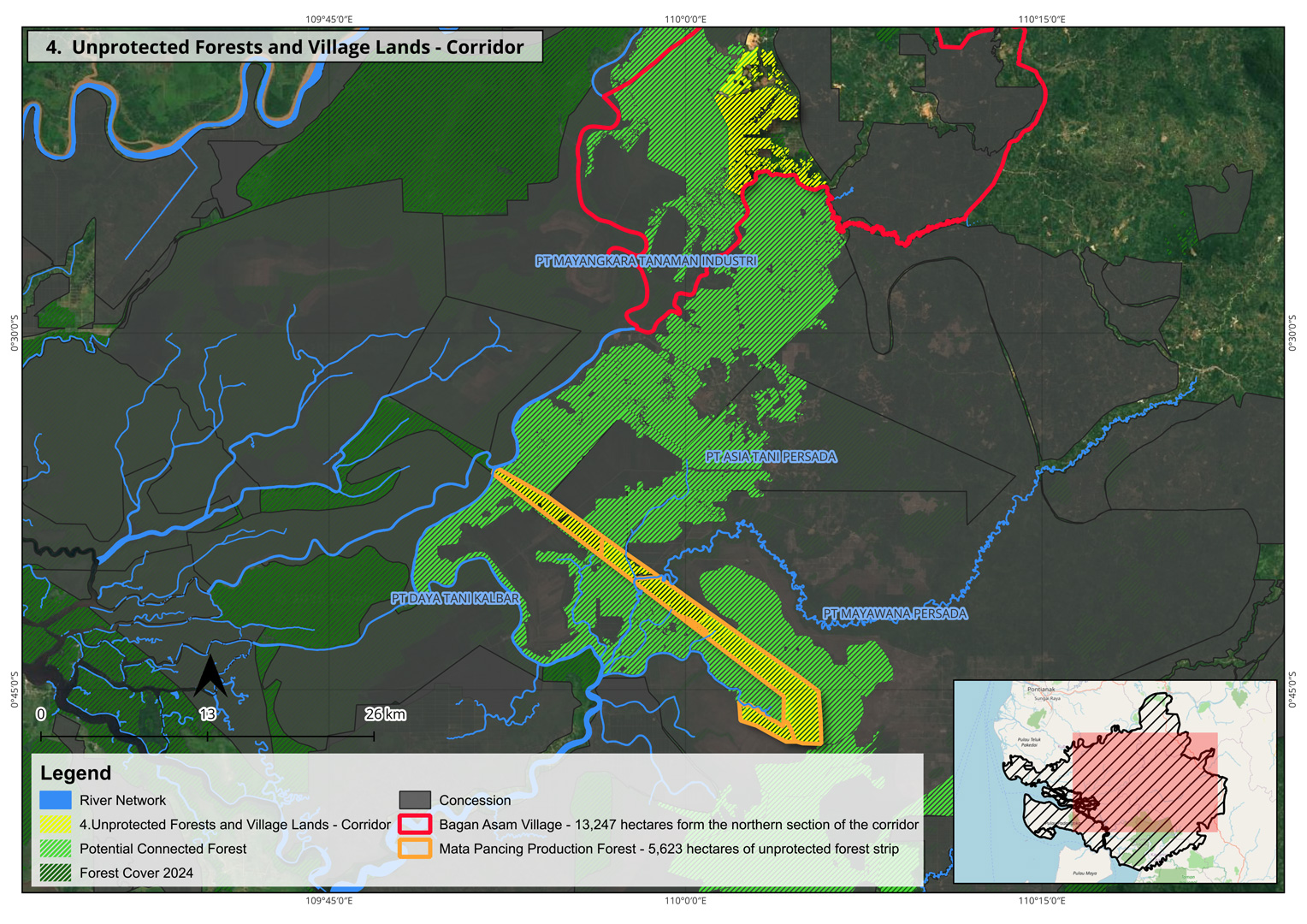
We designated Bagan Asam village in Sanggau district, which forms the northern part of our priority forest corridor, as a pilot village to support the implementation of the village spatial policy on 28 November 2025.
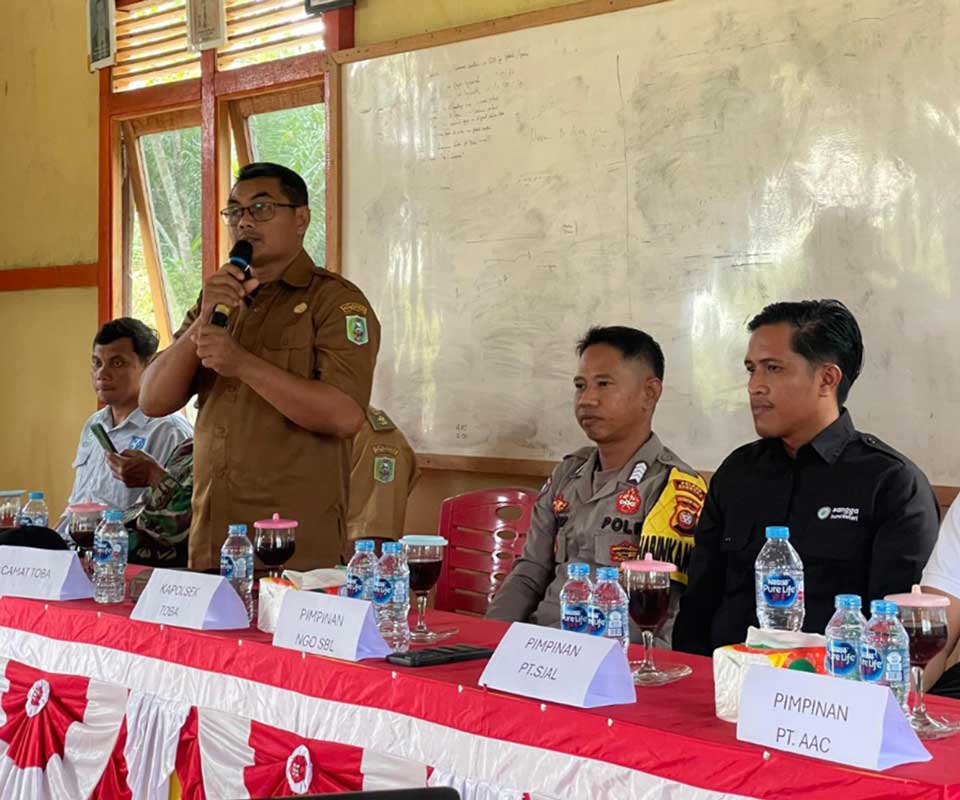
Like many villages in Kalimantan, Bagan Asam still does not have definitive village boundaries. This has impeded their ability to engage with pulp and paper, oil palm, and mining companies operating in their village, as there is no agreement on where the village government’s authority starts and ends. Working with Bagan Asam villagers and the Sanggau district government, we are mapping potential village boundaries and negotiating with neighbouring villages to agree the correct administrative village boundaries. This will lead to an official determination by the Sanggau government.
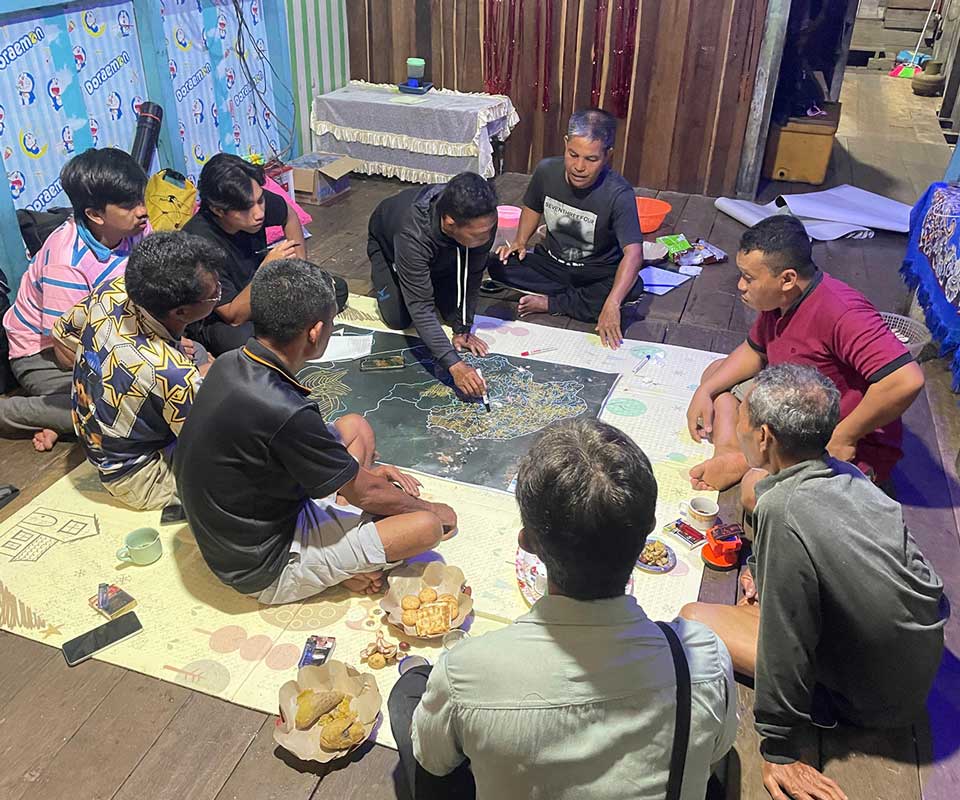
We are also conducting participatory spatial mapping in Bagan Asam to identify locations that they seek to categorise as Protection Zones, which must be conserved, and Production Zones, where some degree of development can occur. To confirm the findings, camera traps and bioacoustics sensors have been placed at strategic points throughout the village. This will determine wildlife occupancy in Protection Zones and the most appropriate conservation strategies, and whether areas designated by villagers as Production Zones are indeed appropriate for development.
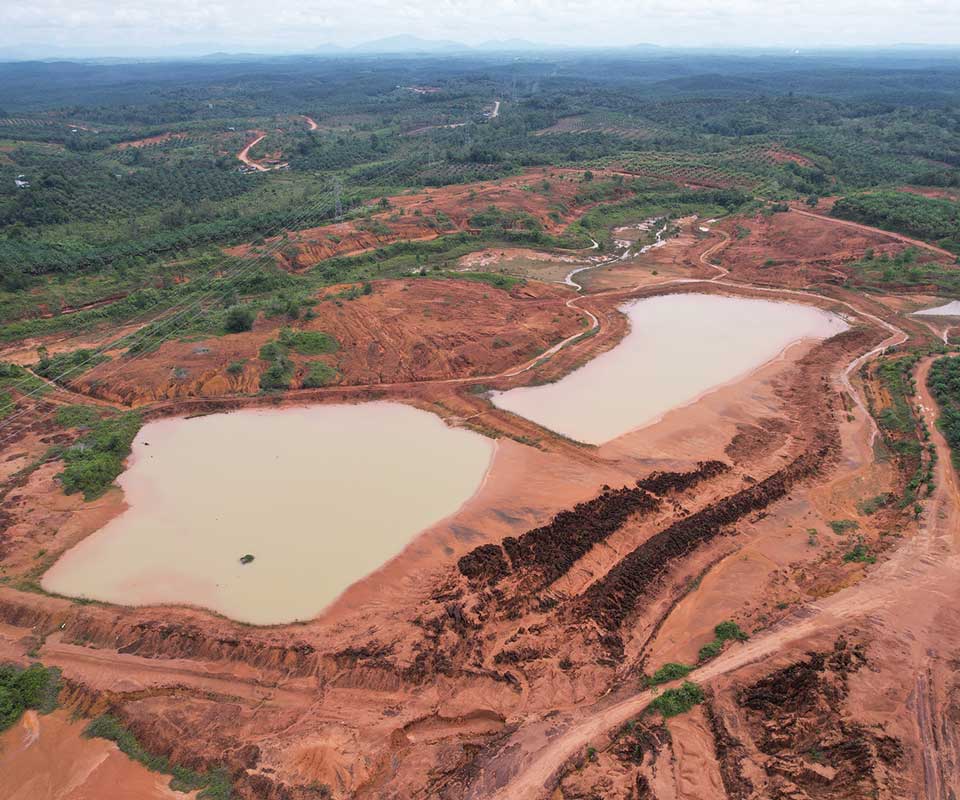
The zoning of Bagan Asam into Protection Zones and Production Zones will facilitate the development of management plans for the areas designated as Forest Estate (and Other Land Uses). Management plans for these areas will become the foundation for how villagers engage with the corporate companies that operate in their village and those that seek expansion (Bagan Asam has significant bauxite reserves and has recently approved a 50×50-metre test pit to the company PT Dinamika Sejahtera Mandiri). This will be strengthened by integration into the six-year Medium-Term Village Development Plan and the annual Village Government Work Plan.